Research · June 2021
A survey about quality education in primary and pre-primary classrooms of Bangladesh
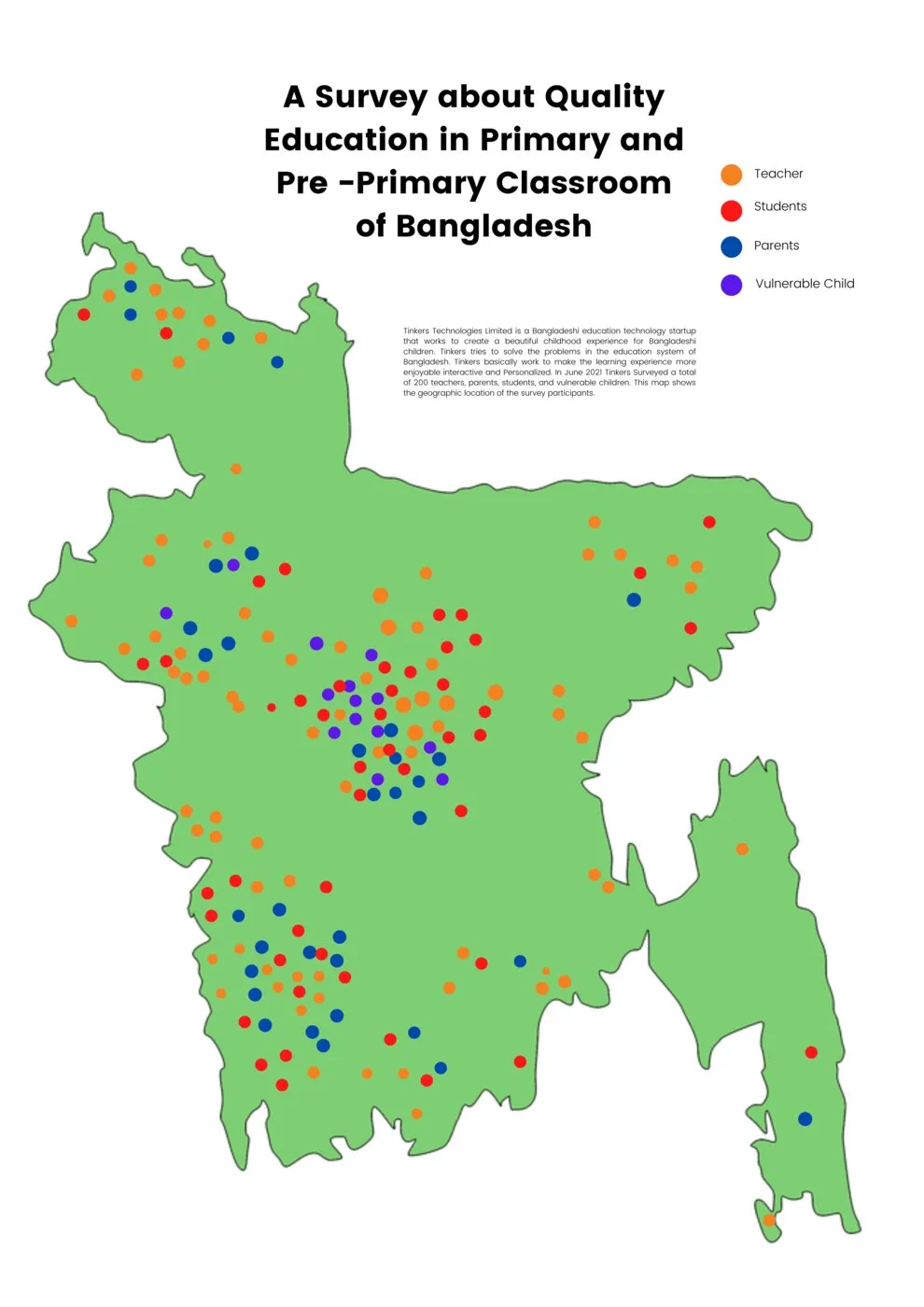
In June 2021, in the middle of the COVID-19 pandemic, we surveyed a total of 200 teachers, parents, students and vulnerable children.
We wanted to understand the current state of learning, and of learning quality, in pre-primary and primary classrooms across Bangladesh. As a Bangladeshi education technology startup working to give children a beautiful childhood, we try to solve the problems in our education system — and that starts with listening to the people inside it.
The map shows where our survey participants live. Here is what they told us.
Teachers
102+ primary school teachers, interviewed by phone
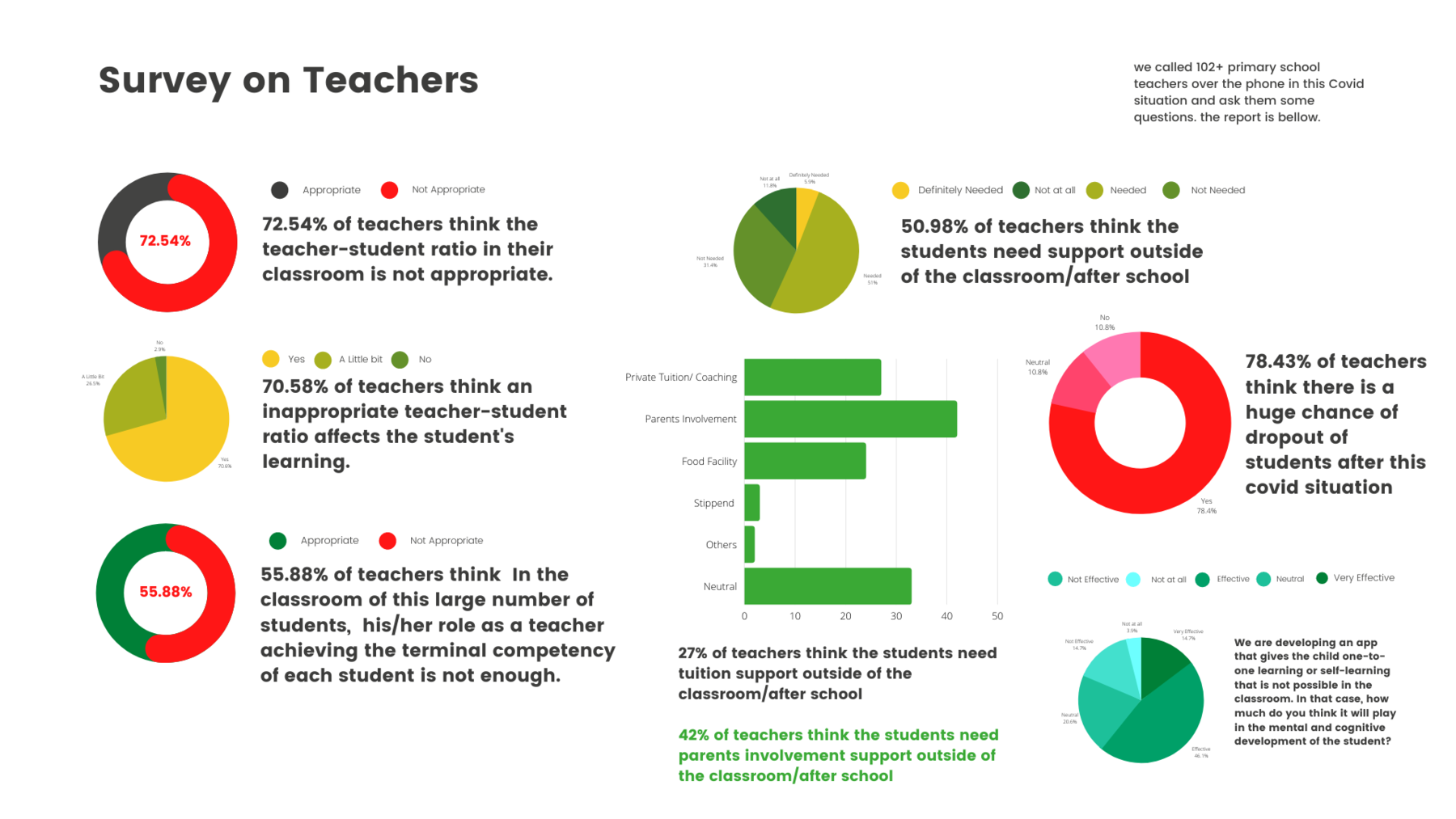
78.43% think there is a huge chance of students dropping out after the COVID-19 situation
72.54% think the teacher–student ratio in their classroom is not appropriate
70.58% think an inappropriate teacher–student ratio affects students’ learning
55.88% think that, with so many students, their role in helping each child reach terminal competency is not enough
50.98% think students need support outside the classroom, after school
42% think students need their parents’ involvement outside the classroom
Parents
36+ parents of primary school children, interviewed by phone
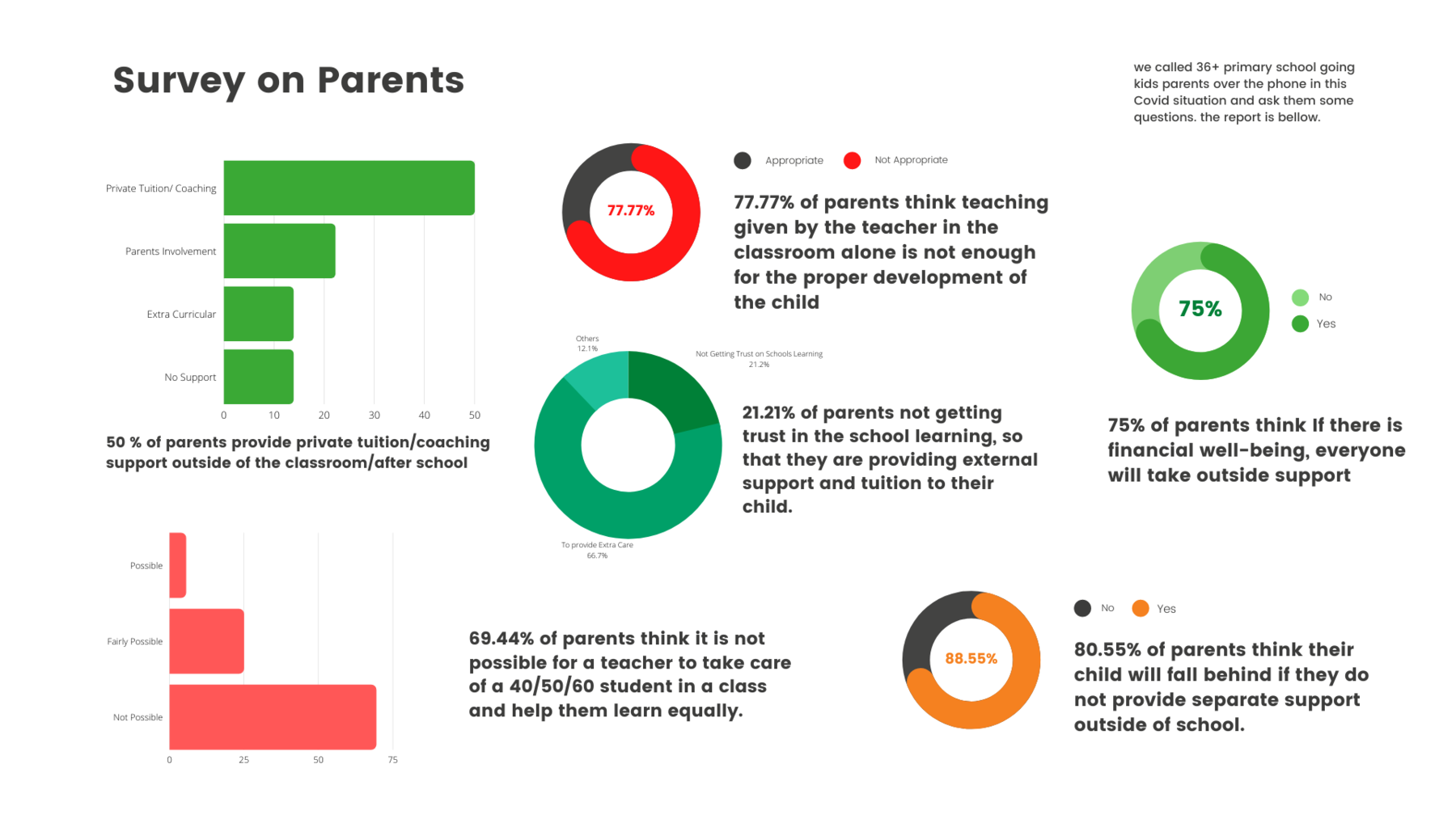
77.77% think classroom teaching alone is not enough for a child’s proper development
75% think everyone would take outside support if they could afford it
69.44% think one teacher cannot care for 40, 50 or 60 students and help them all learn equally
50% already pay for private tuition or coaching outside school
21.21% don’t trust school learning, so they provide external support and tuition
Children
53+ primary school children, interviewed by phone
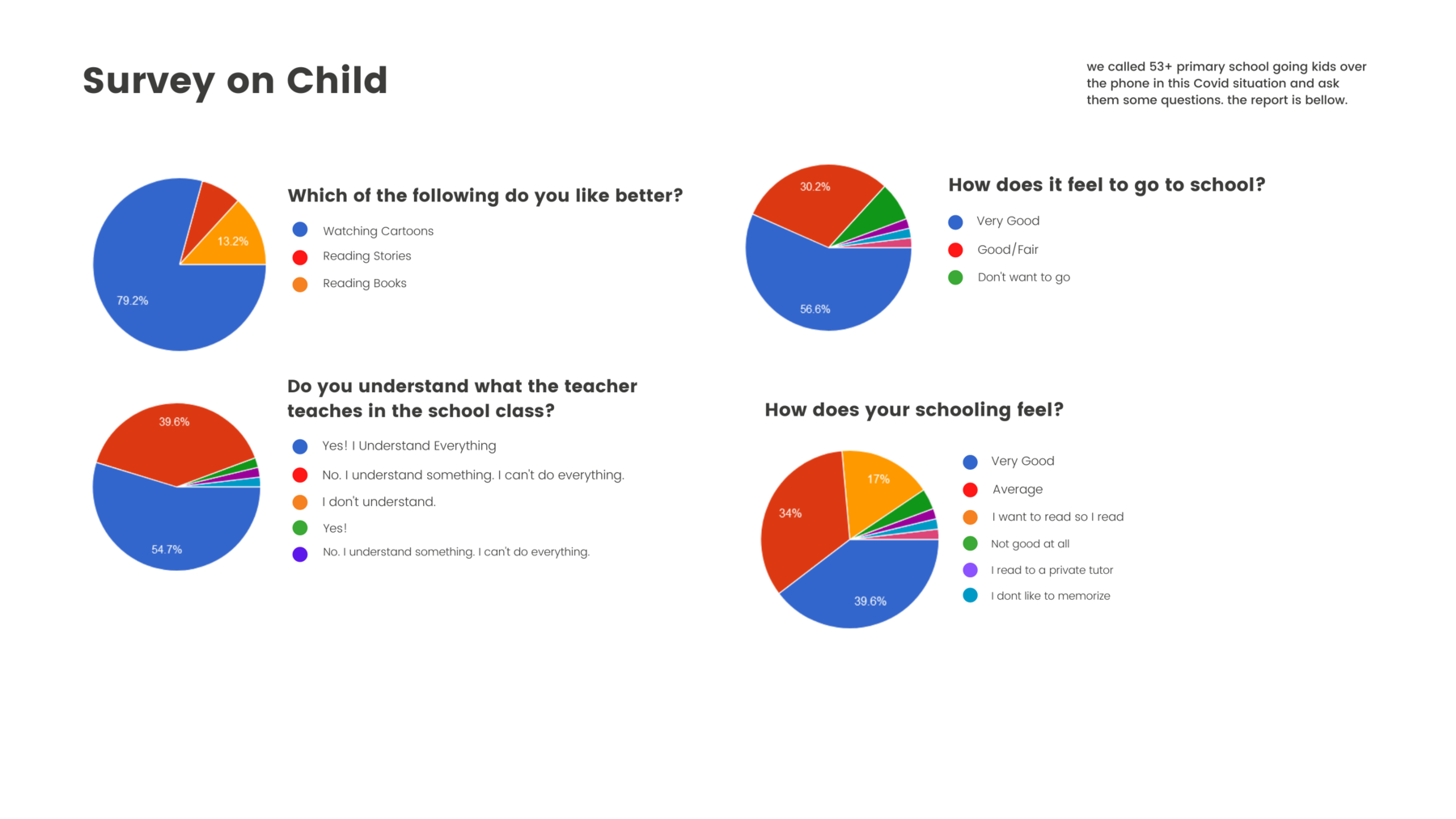
79.2% would rather watch cartoons than read stories or books
56.6% say going to school feels very good
54.7% say they understand everything the teacher teaches in class
39.6% understand some of what is taught but can’t do everything
Vulnerable children
13+ primary school children from vulnerable households, visited at home
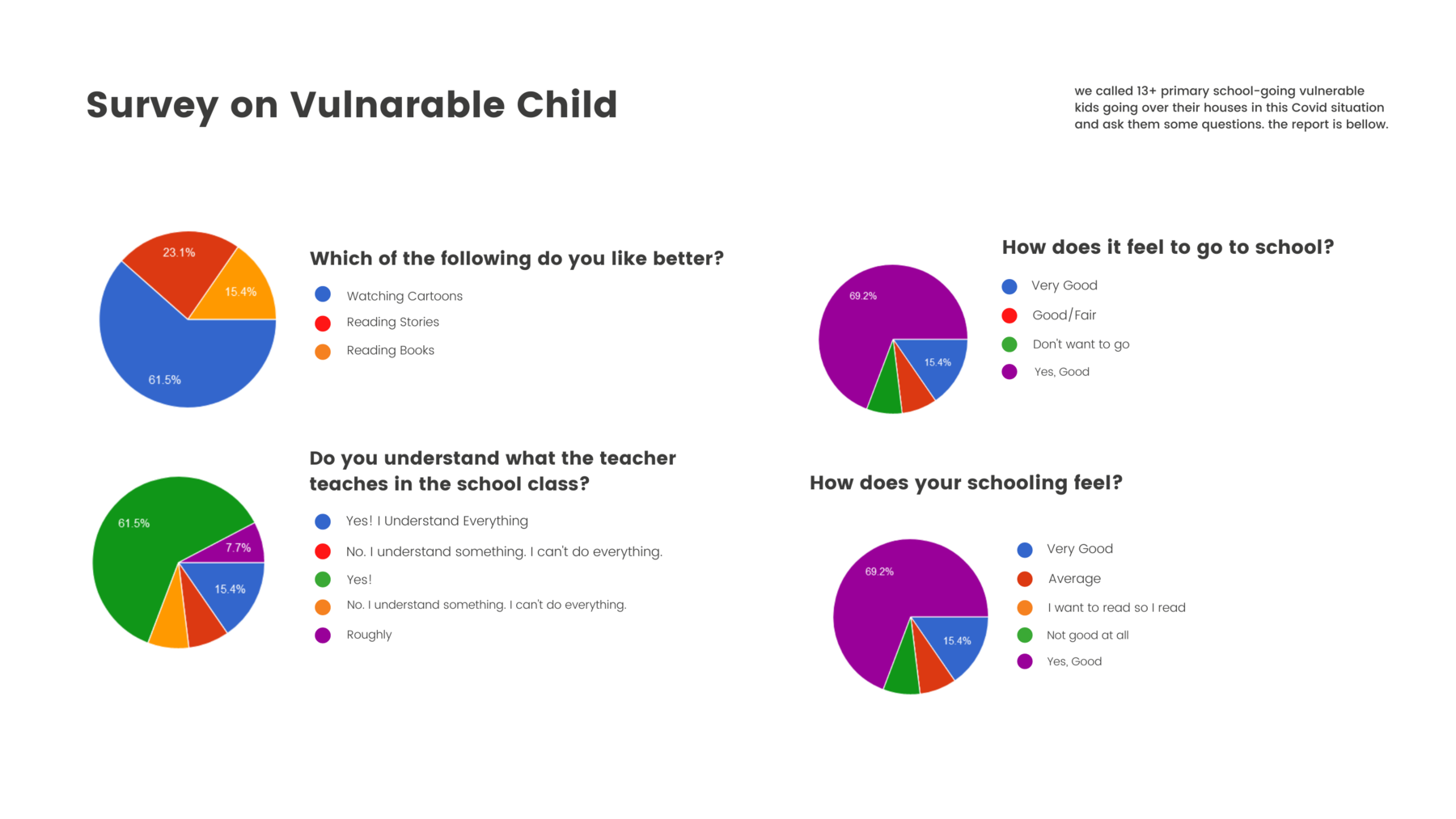
61.5% would rather watch cartoons than read
23.1% prefer reading stories
15.4% prefer reading books
View the original survey boards